LLM, Tokens and Image Generation→
How does an LLM actually understand what you type? And does ChatGPT really draw your images itself?
How Retrieval Augmented Generation turns an LLM from a storyteller into a grounded fact-checker.
Imagine you have an open-book exam. You do not have the subject knowledge memorized. But you have access to all the textbooks and notes related to the subject right next to you. So, when the question comes up, you flip through the textbooks, find the right sections, read what is relevant, and then write your answer based on what you just found. You are not making things up. You are grounding your answer in actual source material.
That's how RAG (Retrieval Augmented Generation) helps you retrieve factual, documented answers to a user's question. Hence, it significantly reduces LLM hallucinations. By the way, does the full form of the RAG signal anything to you?
Traditional LLMs are trained on massive amounts of data available on the internet. But they do not have access to your organization's internal documents or insights. When you ask a question related to data within your organization, LLMs struggle to answer because they are not trained on that data. Here, RAG comes to the rescue.
Using RAG, you can augment (enhance) an LLM with your organization's internal documents and other data. So whenever someone asks "What's the revenue from the fourth quarter of 2025?", the RAG system retrieves relevant documents, and the LLM uses them to generate an answer.
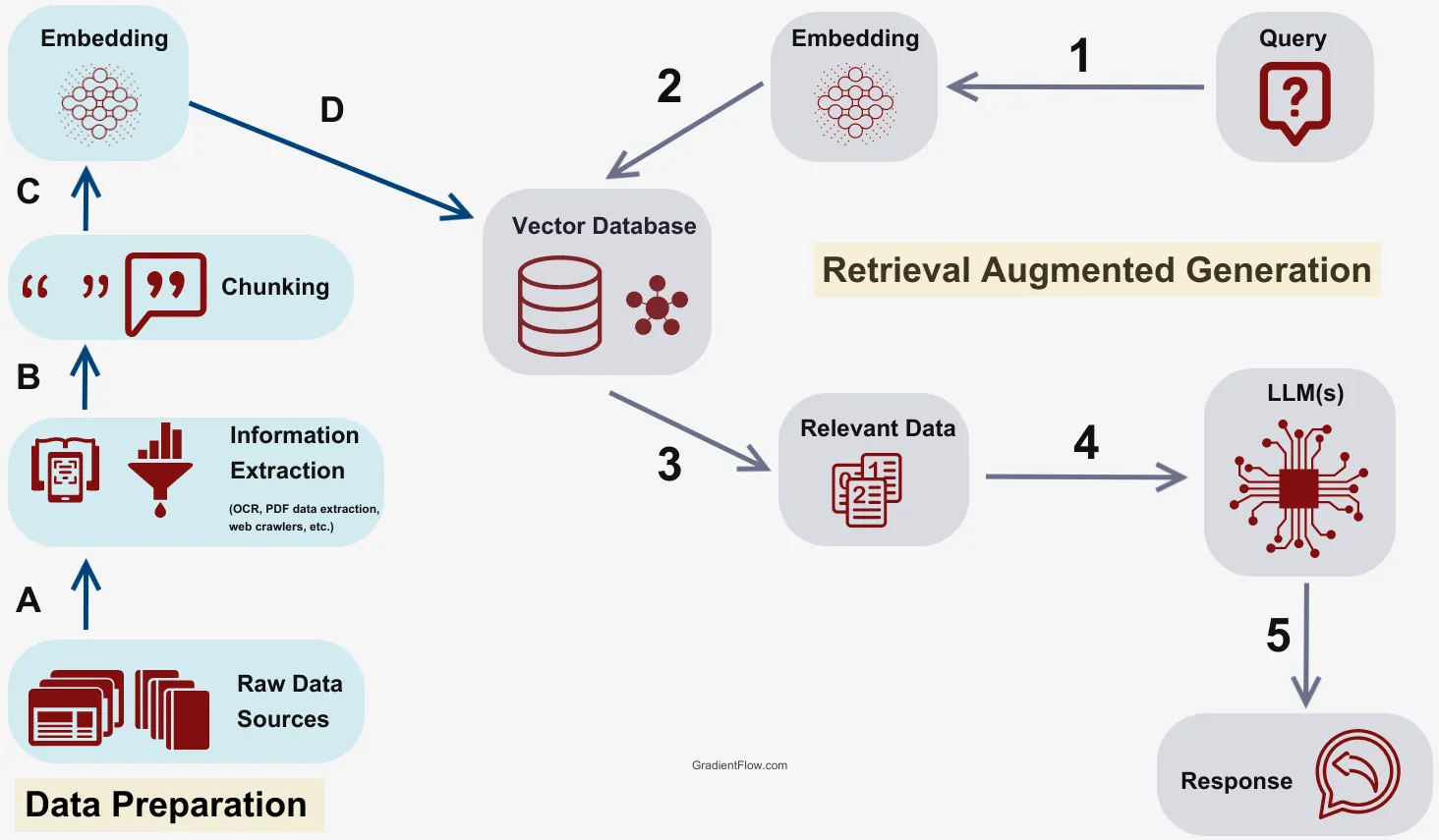
RAG helps you build an internal chat agent trained on your organization's data, customer support chatbots, legal document analysis, etc. RAG systems help retrieve specific product documentation or troubleshooting guides to provide accurate, real-time answers.
If you want to dive deep into RAG and also build a RAG system, this amazing resource might help you:
Fun fact: RAG turns an LLM from a storyteller into a grounded fact-checker.
Let me know your thoughts, questions, or suggestions. I'm eager to learn and happy to help!